Start with the door skin, not the machine catalog
A door panel embossing machine is selected around the finished panel. Two presses with the same nominal tonnage can produce very different results if their frame stiffness, slide guidance, daylight and hydraulic control are not matched to the die.
Before comparing quotations, prepare the panel length and width, sheet material, thickness, pattern drawing or physical sample, target output and available factory space. If you already own dies, record their dimensions, shut height, weight and changeover method.
- Panel and pattern drawing
- Material grade and sheet thickness
- Current or planned die dimensions
- Required panels per shift
- Voltage, installation space and destination port
Choose capacity through an engineering calculation
Nominal force should come from the actual embossed area, material resistance, pattern geometry and forming method. A larger door does not automatically require the same force everywhere; pattern distribution and die contact matter.
LEAD commonly supplies door presses in the 2000T–4500T range, but these figures are a selection starting point rather than a universal rule. Final tonnage should be confirmed by an engineer using the real panel and tooling.
Compare H-frame and eight-column construction
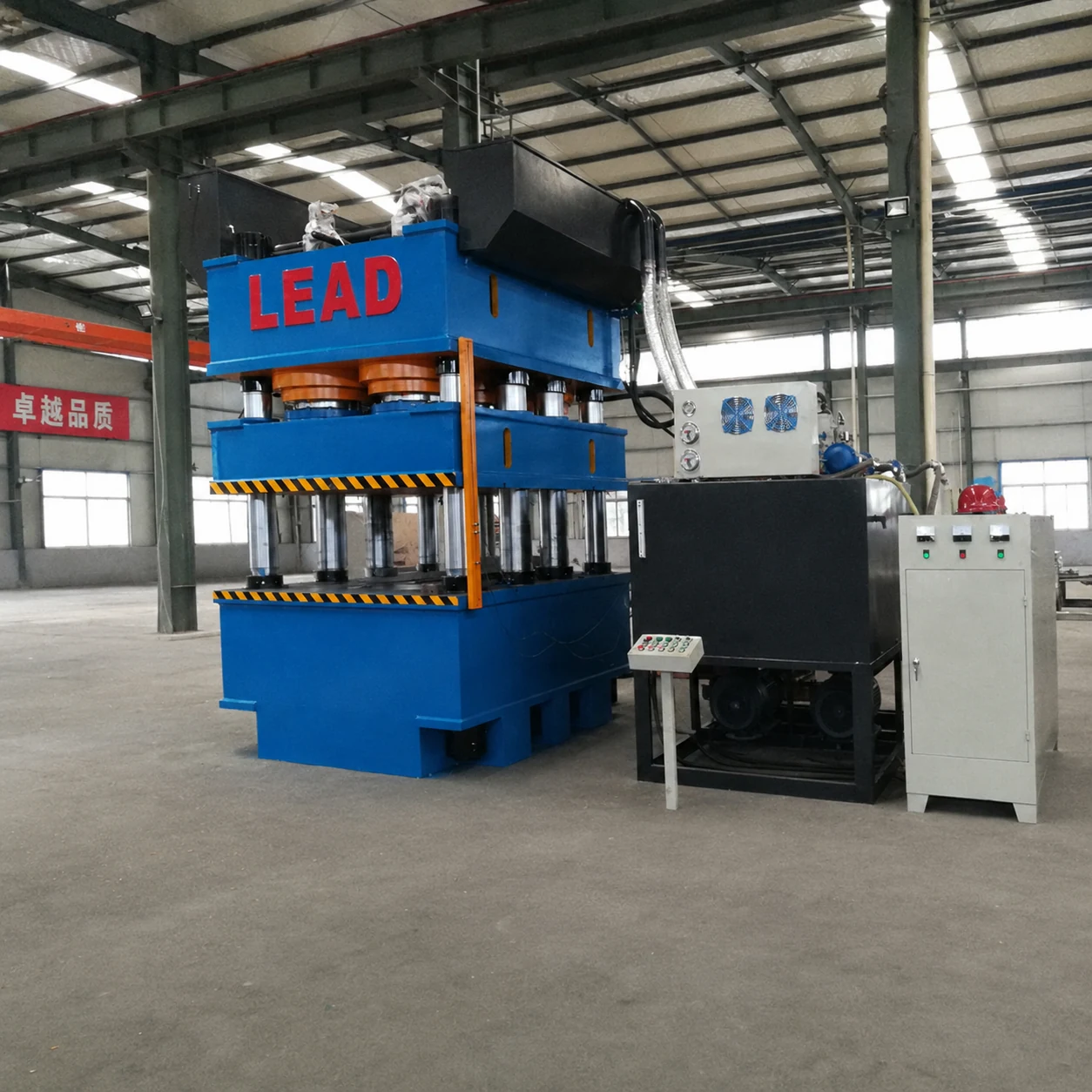
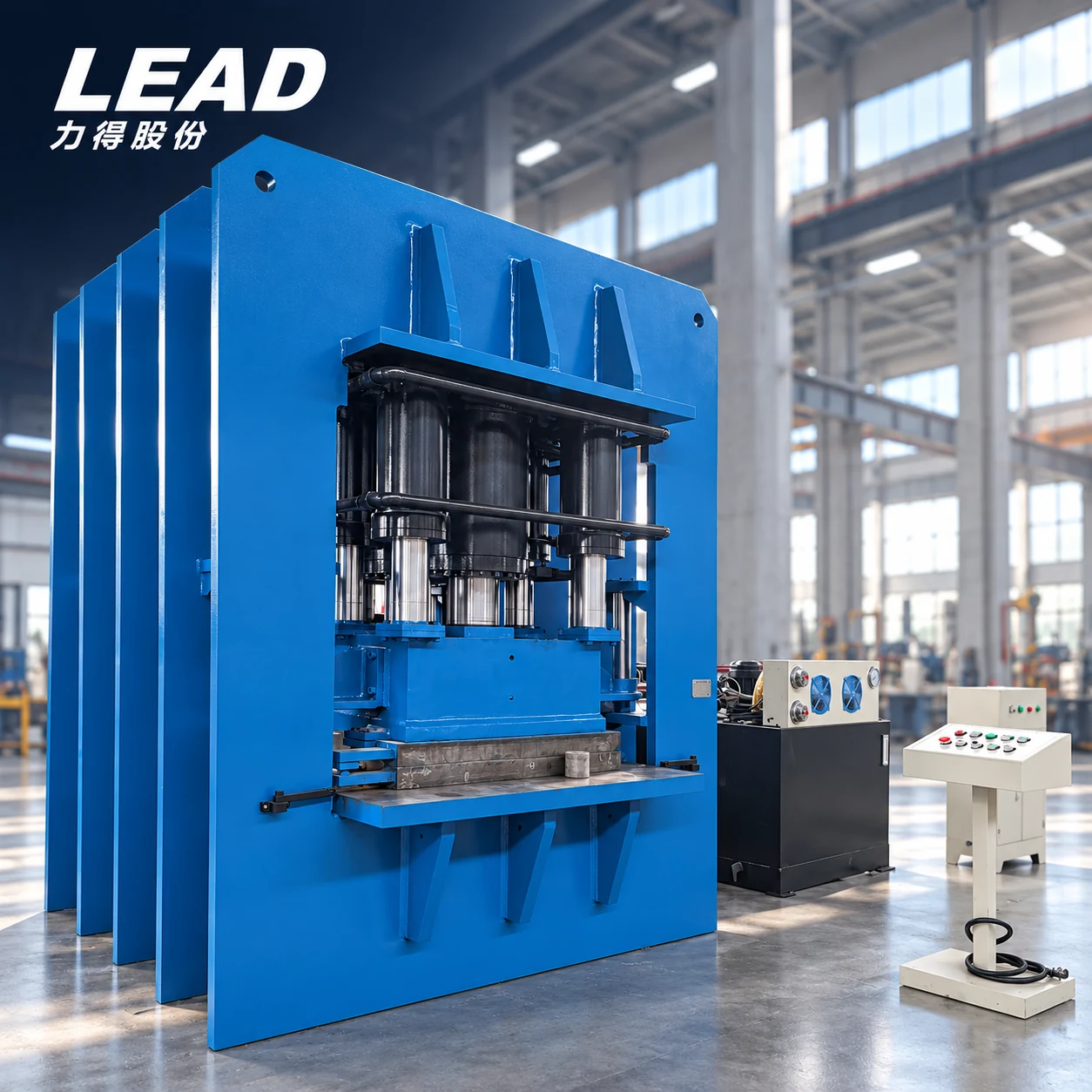
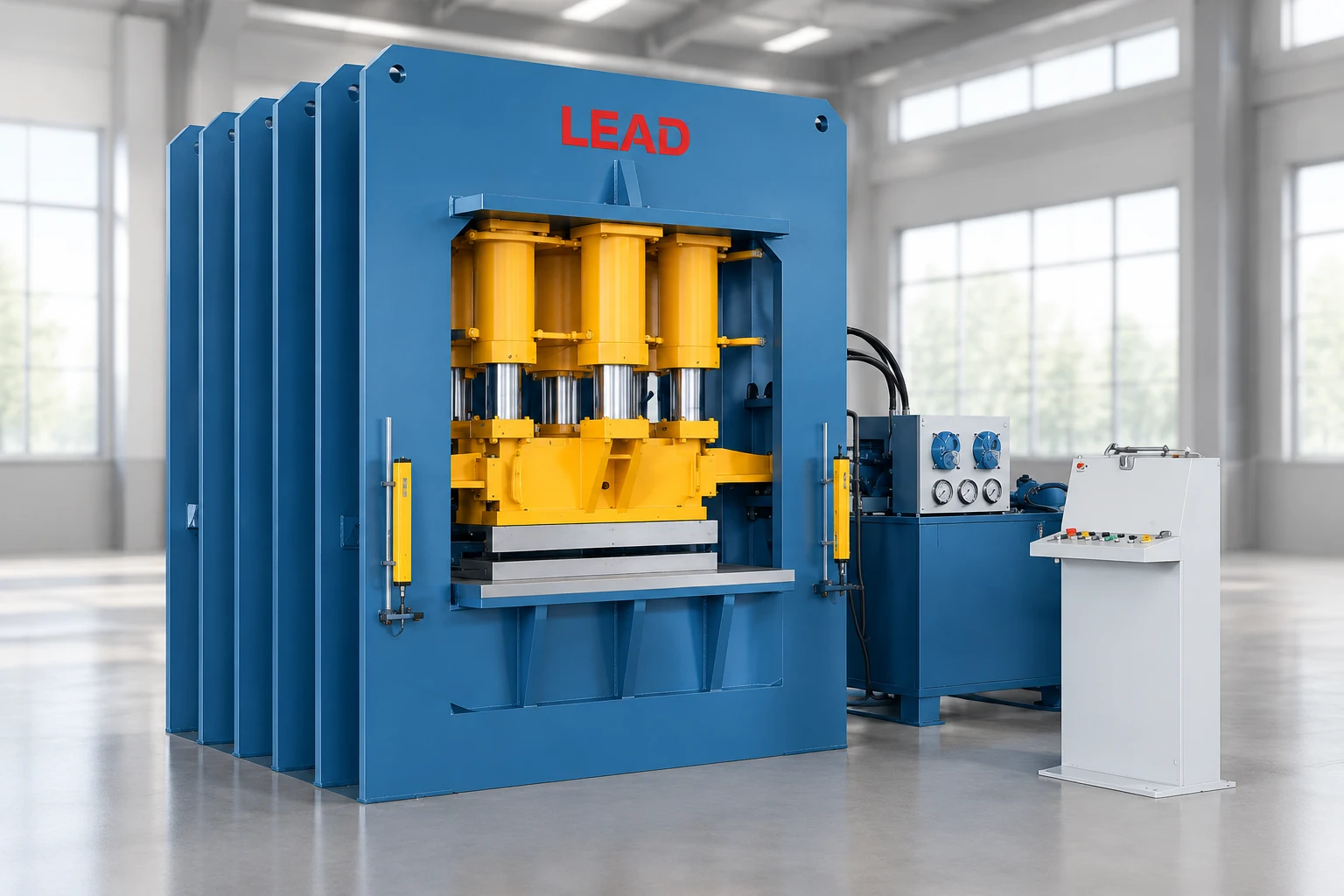
A welded H-frame press offers a rigid straight-side structure with efficient access to the working zone. It is often a practical choice for dedicated formats and layouts where tooling access matters.
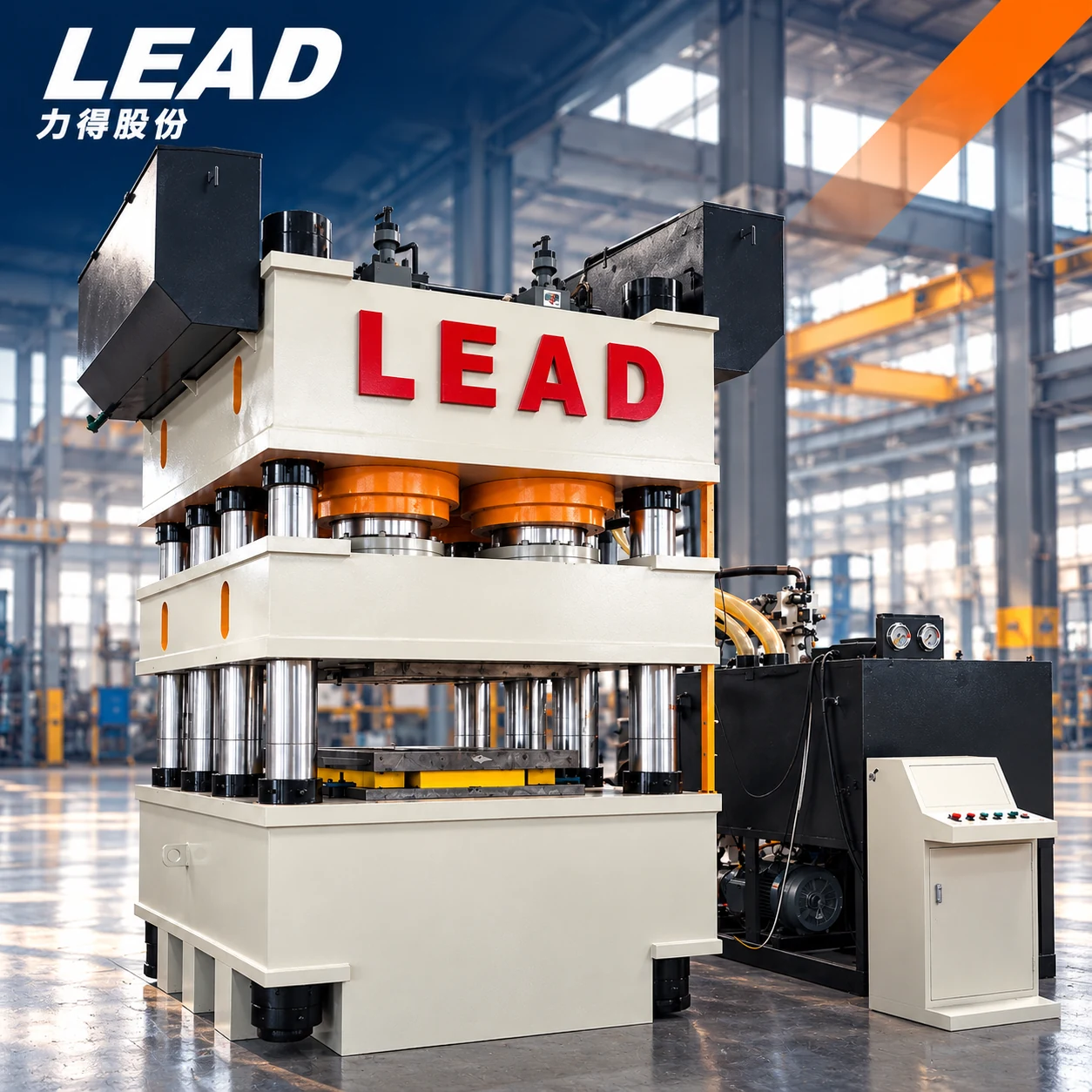
A three-beam eight-column press distributes force through multiple guided columns and is frequently considered for large working areas and demanding full-panel patterns. The right option depends on loading, panel size, tooling and factory layout—not on structure alone.
Decide whether double action is necessary
Single-action machines are suitable for many standard embossing operations. Double action adds independently controlled forming and blank-holding functions, which can help manage material flow for deeper or more complex patterns.
The additional value should be evaluated against pattern depth, tearing or wrinkling risk, die design and required cycle time. A more complex machine is not automatically the most economical choice.
Review the complete production cell
The press is only one part of output. Loading, unloading, die storage, die change, scrap handling, operator access and safety guarding all affect daily production. Define these items in the technical agreement.
Ask for a clear scope covering PLC/HMI functions, pressure holding, stroke settings, safety equipment, documentation, factory testing, commissioning and spare parts. This makes quotations comparable and reduces ambiguity before shipment.
Use a supplier checklist before placing the order
A reliable proposal should connect every major specification to your application. Avoid comparing only tonnage and price.
- Signed technical specification and machine layout
- Confirmed table, stroke, daylight and pressing action
- Electrical standard and component brand list
- Safety scope and automation boundaries
- Factory test procedure and documentation
- Installation, training, warranty and spare-parts support
Need a machine recommendation?
Send your panel drawing, material, thickness and target output. LEAD engineers will review the application and propose a suitable configuration.
Request an engineering review ↗