Embossing is one stage in the door manufacturing flow
A steel door production line typically connects sheet preparation, cutting, embossing, subsequent forming and door assembly. The exact sequence depends on door construction and the manufacturer’s process.
The embossing press must fit this flow. Its loading direction, working height and cycle should be reviewed together with upstream sheet supply and downstream handling.
Start with takt and product mix
Define how many panels are required per shift and how often the pattern changes. A single-pattern, high-volume line has different priorities from a high-mix operation with frequent die changes.
Rated press speed alone does not determine output. Manual handling, die change, inspection and downstream bottlenecks can dominate the actual cycle.
Plan sheet and panel handling
Thin door skins can be large and flexible. Handling equipment should support the sheet without scratches or unwanted bending, while keeping operators outside hazardous zones.
- Sheet storage and loading method
- Centering and die alignment
- Unloading direction and panel support
- Inspection position and acceptable lighting
- Finished-panel stacking and surface protection
Reduce die-change losses
For high-mix production, review die weight, storage position, lifting equipment, connection methods and access around the press. Quick-die-change options should be evaluated by measured changeover steps.
Standardized die settings and HMI recipes can also reduce setup variation after the mechanical change is complete.
Design safety and maintenance into the layout
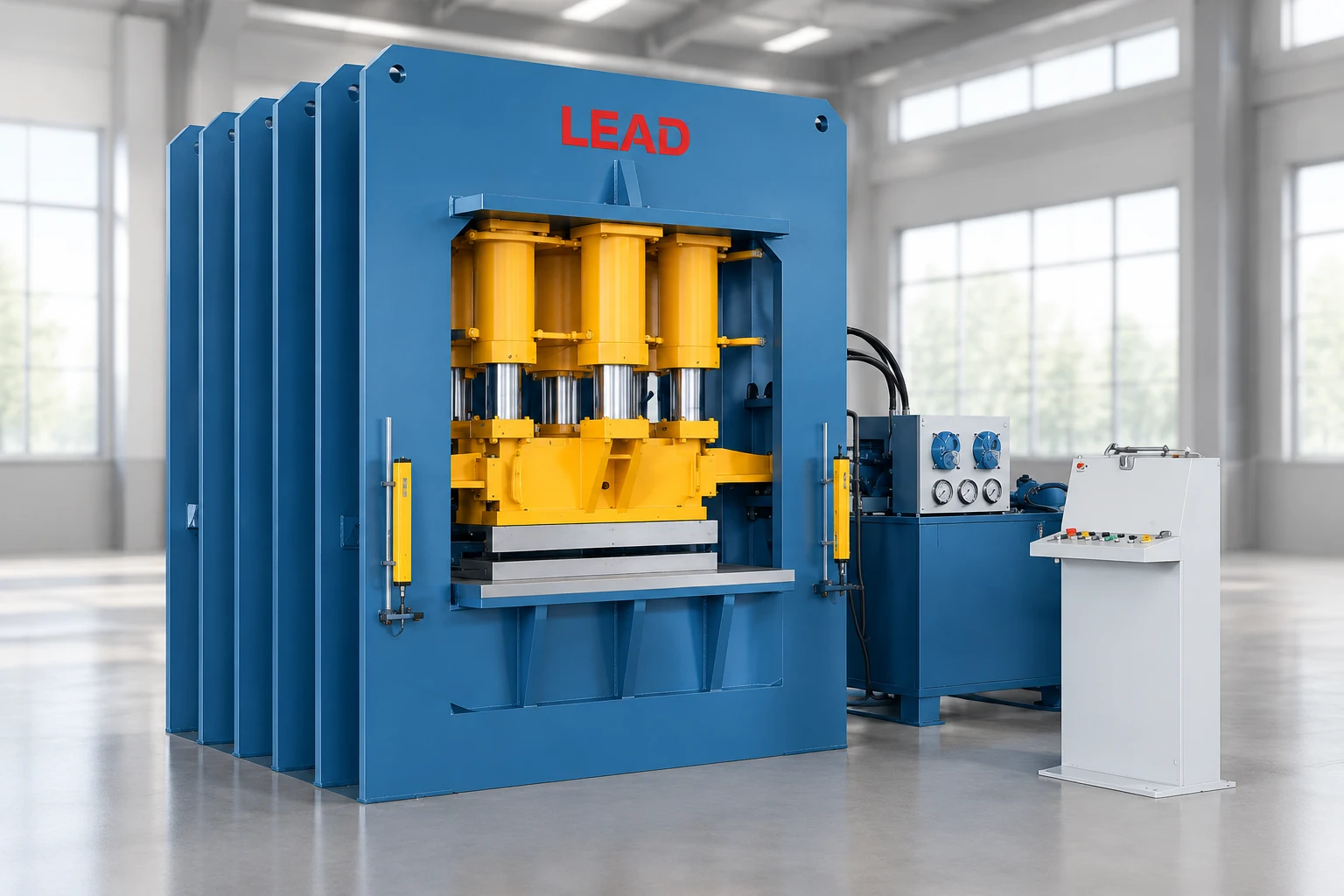
Leave safe access for die work, hydraulic maintenance, electrical service and daily cleaning. Guarding and light curtains must match the actual loading method.
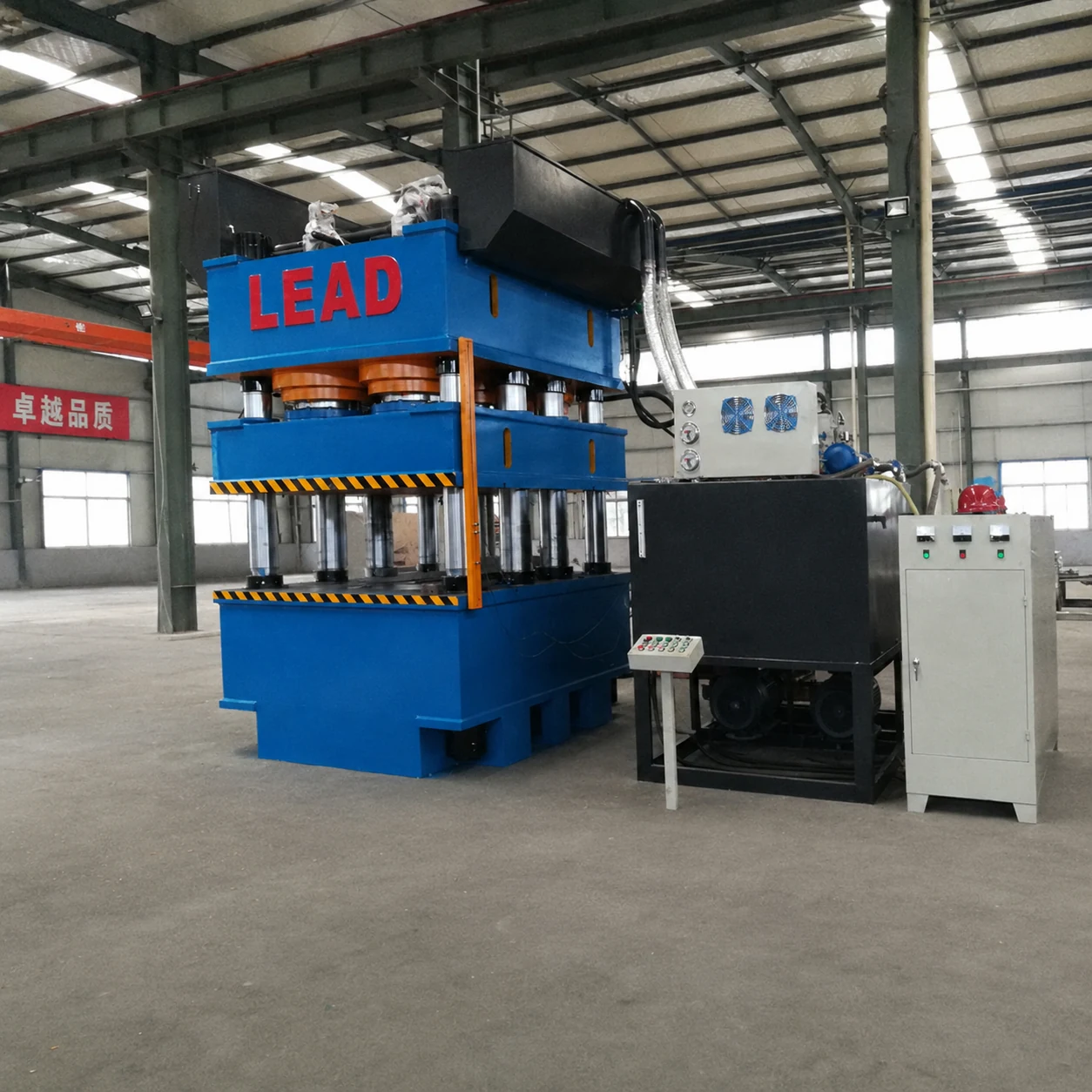
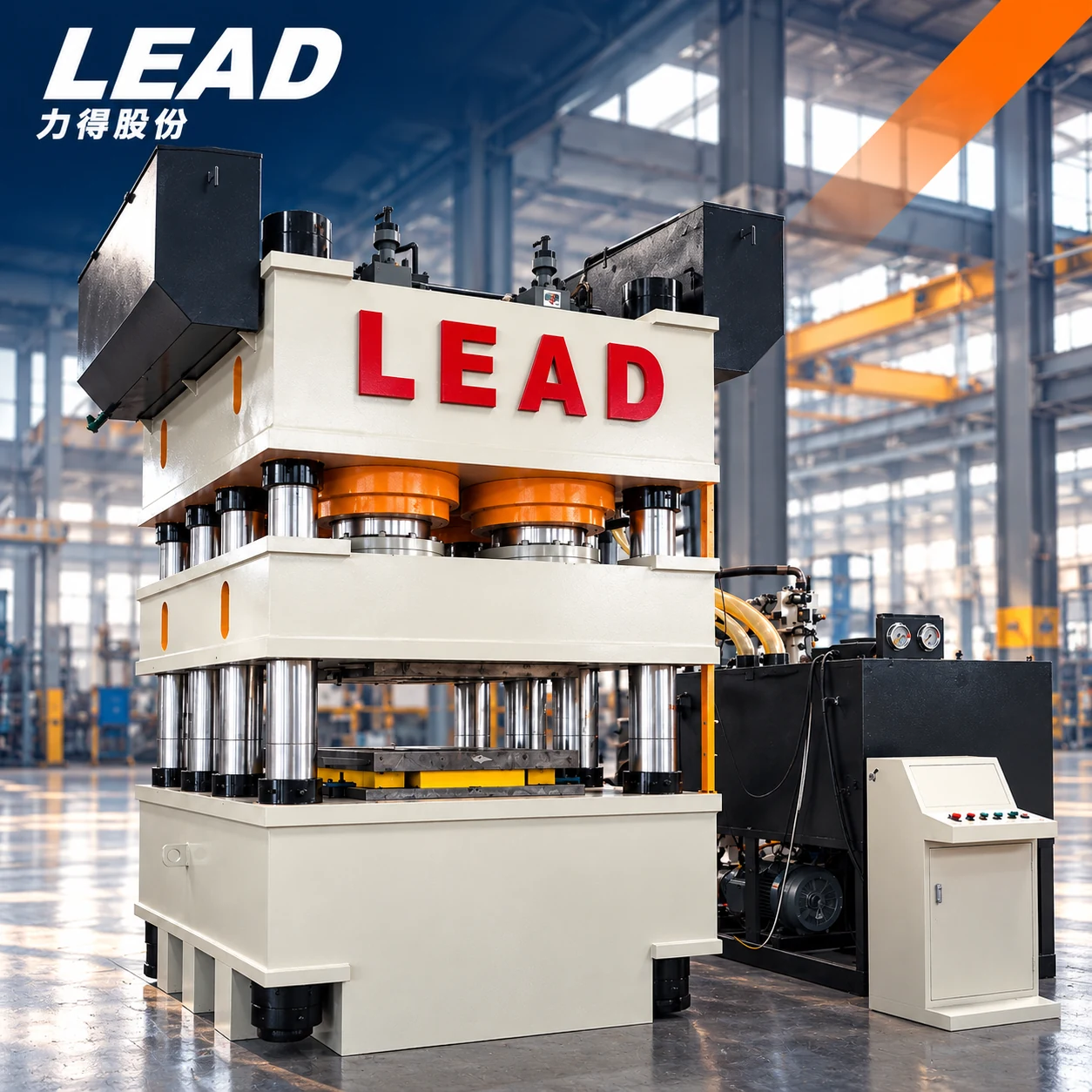
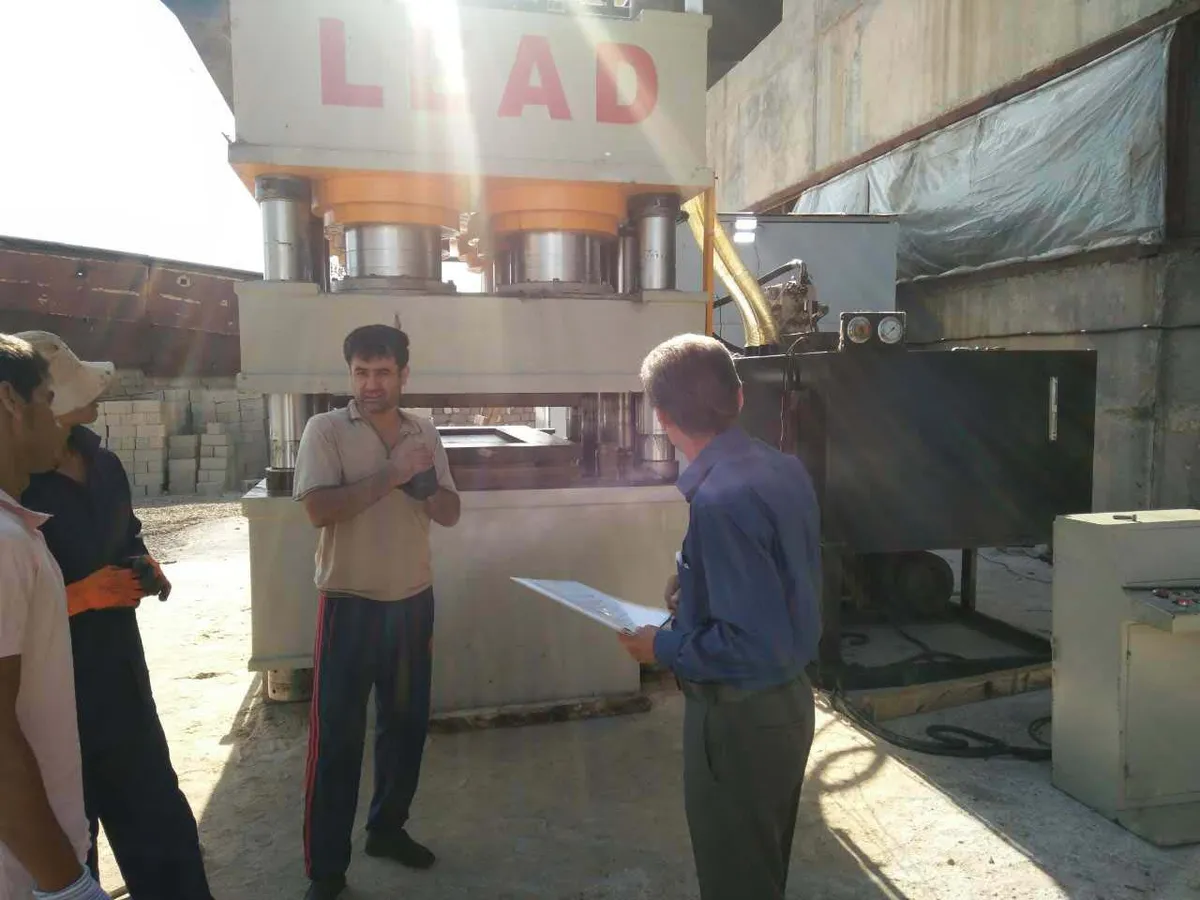
LEAD can define the press and optional handling interfaces as one layout so installation and later automation are considered before manufacturing.
Need a machine recommendation?
Send your panel drawing, material, thickness and target output. LEAD engineers will review the application and propose a suitable configuration.
Request an engineering review ↗